Why the food here is different
Most Cycladic islands import nearly everything. Naxos does not: it has the largest area of arable land in the archipelago, green hillsides that support actual cattle, a working dairy cooperative, potato fields, olive groves and citrus. The result is that a taverna in Filoti is cooking with ingredients from within a few kilometres, at prices set for a local clientele who eat there year-round. This is the single biggest and least-advertised reason to choose Naxos over its neighbours, and it is why the food is noticeably better and cheaper than on Mykonos or Santorini.
What to order
Graviera Naxou is the island's PDO hard cheese, made from cow's milk with some sheep and goat, nutty and slightly sweet - ask for it saganaki-fried or just with bread. Arseniko is the harder, sharper aged cheese; xinotyro the sour one. Naxos potatoes have protected status and taste it, so anything described as patates from the island is worth having. Naxian beef appears on menus as a rarity in Greece, and the goat - slow-cooked, usually with tomato - is what to order in the mountain villages. For dessert, look for kaltsounia (sweet cheese pastries) or the local thyme honey. And finish with kitron, distilled from citron leaves, which comes in green, yellow and clear at ascending strengths.
Where to eat, by area
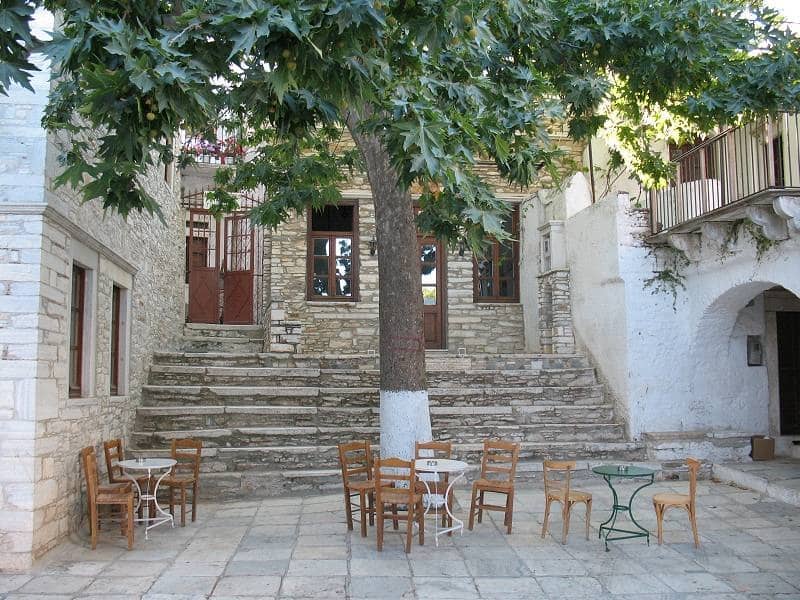
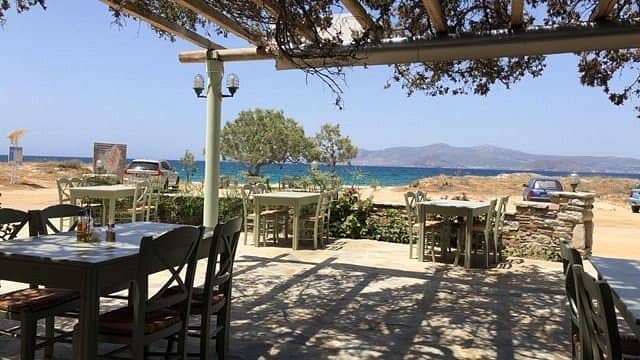
The Chora waterfront is convenient and perfectly decent, but it is the most expensive food on the island and the least local - walk two streets up into the old town and quality rises as prices fall. In the villages, Chalki's square has two excellent cafés and Filoti has several tavernas that cook for residents rather than visitors, which is exactly what you want. Apeiranthos is where to have lunch on a mountain-drive day. On the east coast, Moutsouna's harbour tavernas do fish straight off the boats and are worth the fifty-five-minute drive on a windy day when the west coast is unpleasant. On the beaches, Agia Anna has the best cluster of places actually on the sand.
How to spot the right taverna
Three signals, all reliable. First, look at who is eating there at 21:00 - if the tables are mostly Greek, and mostly not on holiday, you have found it. Second, a short handwritten or seasonal menu beats a long laminated one with photographs; a kitchen doing eight things well is a better bet than one doing sixty. Third, if someone stands outside actively soliciting passers-by, walk on. The tavernas worth eating at on Naxos do not need to. One more piece of local practice: ordering several small plates for the table rather than a main each is both cheaper and how the food is meant to be eaten.