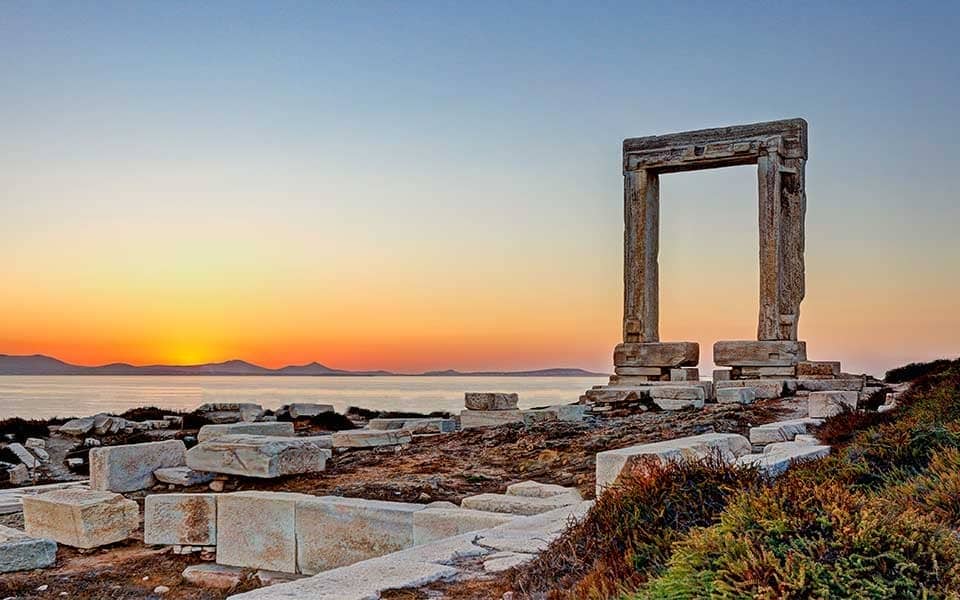
Watch the sunset from the Portara
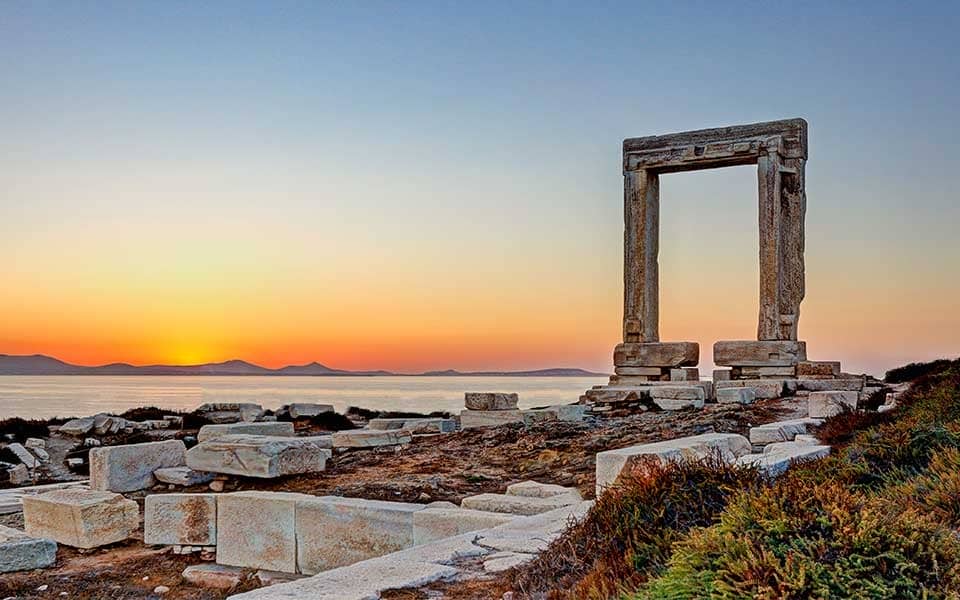
The Portara is a single marble doorway, six metres high, standing alone on the islet of Palatia at the end of a causeway from Chora's harbour. It was to be the entrance of a temple to Apollo begun around 530 BC and abandoned when the tyrant Lygdamis fell; the rest of the marble was carted off over the centuries and only the doorframe - too heavy to move - remains. Walk out about forty minutes before sunset, because the causeway fills up and the good rock ledges go first. The trick locals use: rather than standing in the crowd on the islet, take a table at one of the harbour-front tavernas facing it and watch the sun set *through* the frame with a drink in hand. Free, open at all hours, and the one thing on Naxos you should not skip.
Get lost in the Kastro
Chora's old town climbs the hill behind the harbour in three tiers, and the top one is the Kastro: the walled Venetian quarter built after Marco Sanudo took the island in 1207 and made it the capital of the Duchy of the Archipelago. Unusually for Greece, Catholic families still live in the tower houses their ancestors built, coats of arms still above the doors. Inside the walls are the Archaeological Museum (in the old Jesuit school where Nikos Kazantzakis briefly studied), the Catholic cathedral, and the Della Rocca-Barozzi Venetian Museum, which is a private home you can actually tour. Go up in the late afternoon when the marble underfoot turns gold. Getting lost is the activity; the hill is small enough that you cannot really go wrong.
Drive the Tragea valley and its Byzantine churches
The Tragea is a wide inland valley of ancient olive groves between Chalki and Filoti, and it contains one of the densest concentrations of Byzantine churches anywhere in Greece - more than thirty within a few kilometres, many with frescoes from the 9th to 13th centuries. Panagia Drosiani near Moni is the one to prioritise: parts of it date to the 6th century, making it among the oldest churches in the Balkans still in use, and the layered frescoes inside include a rare depiction of Christ as a young man. Panagia Protothronos in Chalki and Agios Georgios Diasoritis nearby are both worth the stop. Opening hours are informal - often a caretaker with a key who appears when you arrive. This is a full half-day and it requires a car.
Have lunch in Apeiranthos
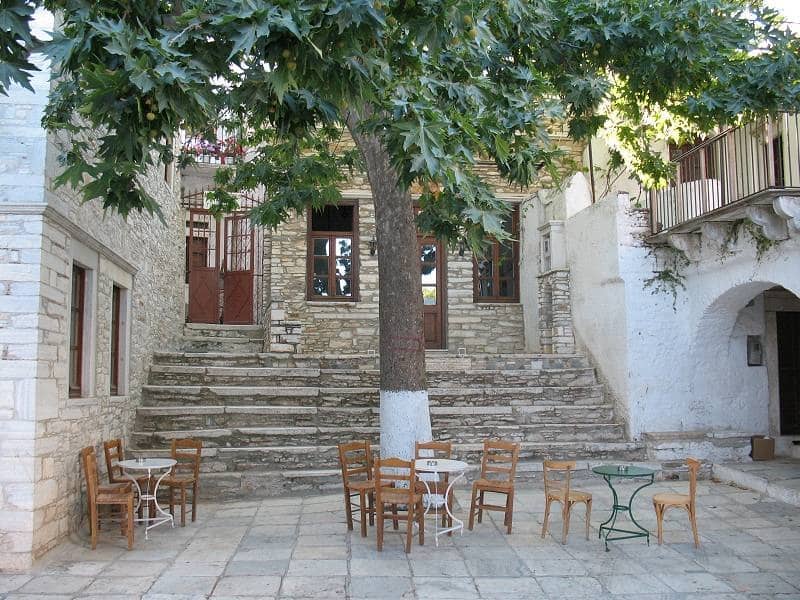
Apeiranthos sits at 600 m on the eastern flank of Mount Fanari and is the most striking village on the island: entirely paved in marble, built by settlers from Crete in the 17th century, and still speaking a dialect with recognisably Cretan traces. There are four small museums along one street - archaeological, geological, folk art and natural history - which tells you something about the place. Park at the entrance; the village itself is not driveable. Eat at one of the tavernas on the main lane and order whatever the goat dish of the day is. The drive up from Filoti is 25 minutes of switchbacks with a view over the Tragea that stops most people at least twice.
Find the three Kouroi
Naxos has three colossal unfinished marble statues lying exactly where they were abandoned 2,600 years ago, and walking up to one is genuinely startling. The Kouros of Apollonas is the largest at 10.7 m, lying on his back in a quarry above the village in the far north - probably a bearded Dionysus, abandoned when a crack appeared. Two more, both around 5.5 m, lie in the olive groves at Flerio near Melanes, a short signed walk from a small car park and much quieter. The Flerio pair are the better visit: there is shade, a stream, a tiny taverna, and usually nobody else. All three need a car; Apollonas is an hour each way from Chora on a beautiful but demanding mountain road.
The rest of the twenty-one
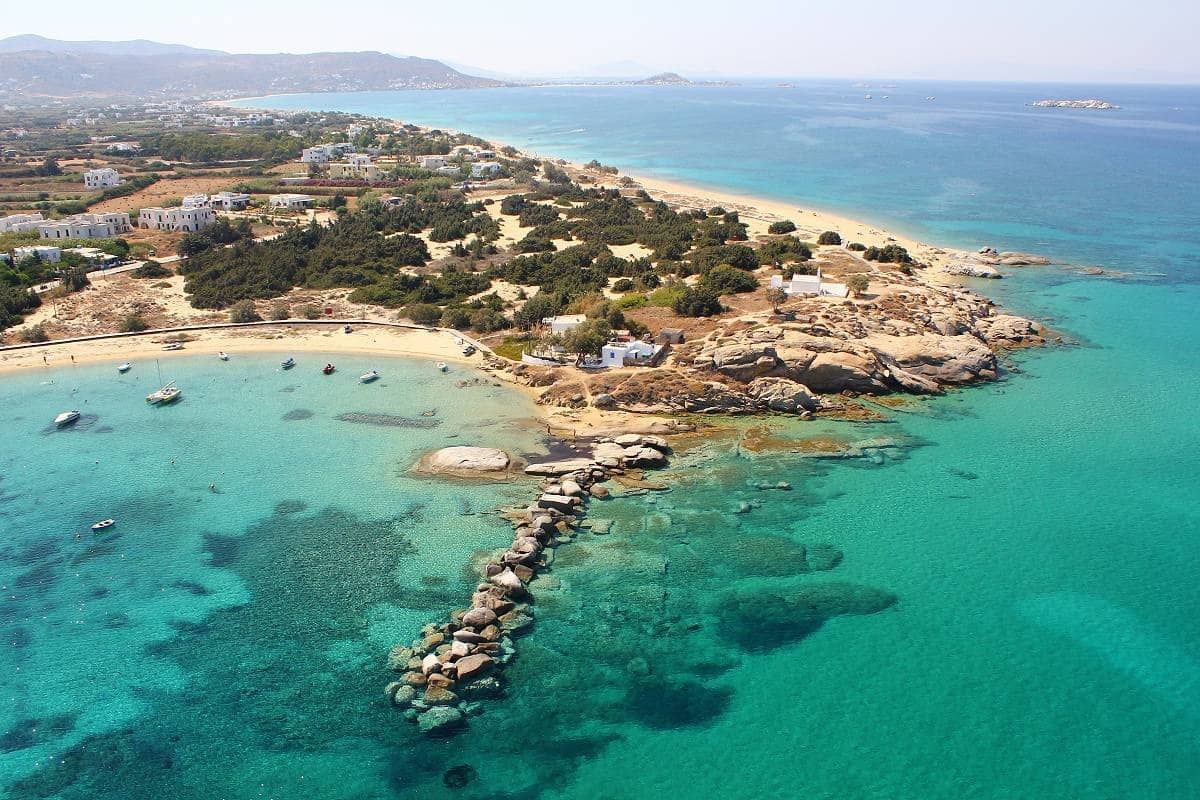
Swim at Plaka, Agios Prokopios and Alyko. Climb Mount Zas from the Agia Marina trailhead (3 hours return). Visit the Temple of Demeter at Sangri, a small, perfect 6th-century BC marble temple with almost no visitors. Taste kitron at the Vallindras distillery in Chalki, working since 1896. Walk the Alyko cedar forest to the painted abandoned hotel. Watch kitesurfers at Mikri Vigla. Eat at a taverna in Moutsouna on the east coast. Take a day boat to Koufonisia or Iraklia. Visit the Bazeos Tower. See the emery mines and the aerial cableway at Koronos. Buy graviera at a village dairy. Have a coffee in Chalki's square. Swim at Panormos in the far south. Visit Agios Georgios beach at dawn, before anyone else. Drive the west coast road at golden hour. And spend one evening doing nothing at all in Filoti's plateia, which is the most Greek thing on the island.